
From Search Engine to Answer Engine: Answer Engine Optimisation for UK Small Businesses
Published: 18 November 2025

Most meta descriptions I see on UK small business websites are doing nothing. They’re either stuffed with keywords, lifted from the first paragraph of the page, or left blank and filled in by Google with whatever sentence it can find. That’s a missed click every time someone sees your site in a search result – about 155 characters of free ad space you’ve left empty.
I’ve been writing meta descriptions since 2007. Some of them are still pulling clicks today. The good ones aren’t clever, they’re just useful.
This post walks through how I write them now in 2026, what’s changed, and what’s stayed the same.
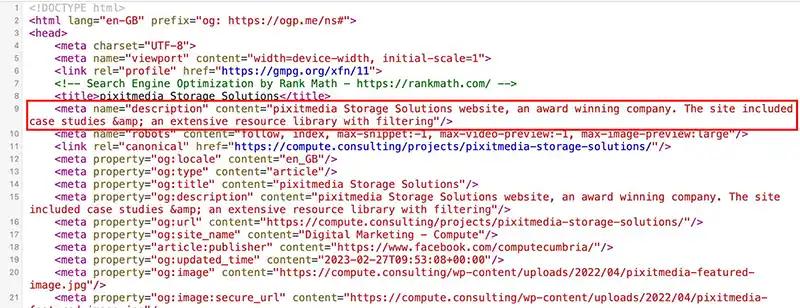
A meta description is a short snippet of HTML that lives in the <head> of your page:
<meta name="description" content="Your description goes here.">
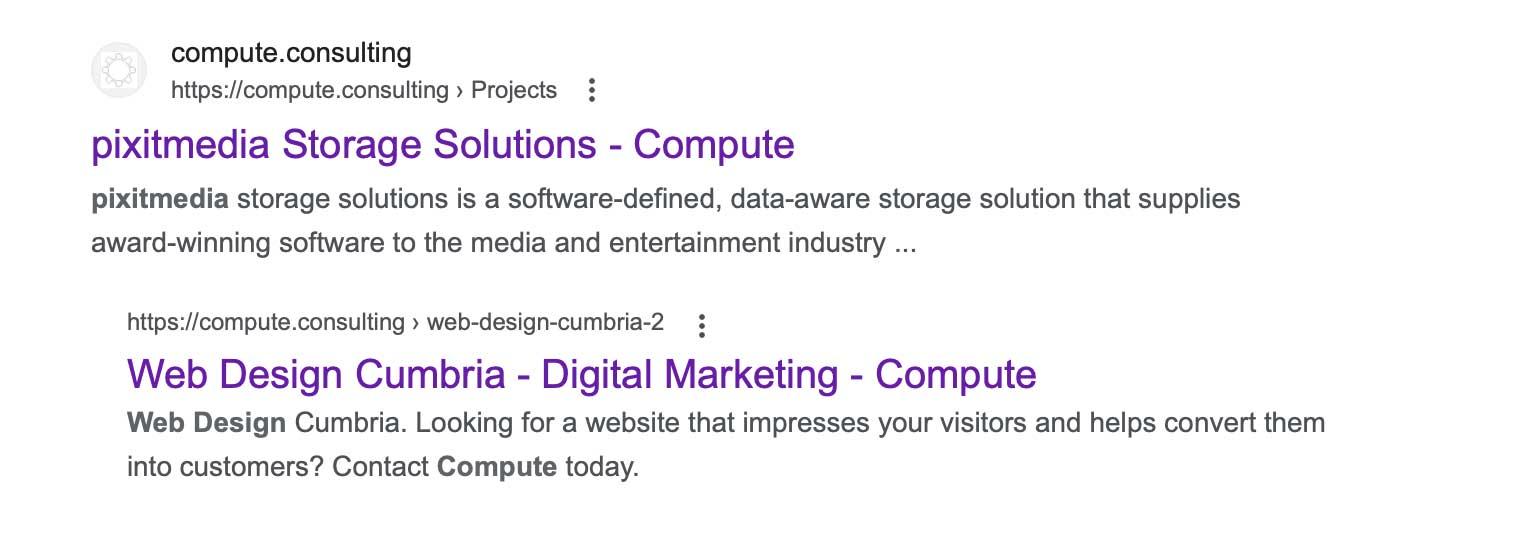
Google reads it. Sometimes it shows it under your page title in the search results. Sometimes it doesn’t. That’s the whole job.
It’s not a ranking factor in the way a page title is. It’s a click-through factor – which matters more than people realise, because click-through rate feeds back into how Google judges whether your result is the right one for a query.
Write a description that earns clicks and you tend to keep the position you’ve earned. Write a boring or off-topic one and you bleed clicks to the result below you. Google notices.
Yes – but not the way most “meta description SEO” guides claim.
Google has confirmed publicly, more than once, that meta descriptions aren’t used as a direct ranking signal. Putting your keyword in there won’t push you up the rankings.
What it does do:
The honest answer to “do meta descriptions affect SEO” is: indirectly, yes – through searcher behaviour, not through the algorithm. That’s the version a senior practitioner will give you. Anyone telling you it’s a direct ranking factor is reading from a 2012 playbook.
Google truncates with an ellipsis once your snippet gets too wide for the result box. The cut-off is measured in pixels, not characters, but the working rules I use:
If you’re writing for a UK local business, that mobile cut-off matters more – over 60% of “near me” searches happen on a phone, and a chopped-off description hurts more than no description at all.
Don’t pad to hit 160. A 110-character description that nails the offer beats a 160-character one that wanders.
Here’s the order I work in. Every time.
Here’s the description I wrote for this post, using my own steps:
Learn how to write meta descriptions that earn clicks. Length, examples and what to do when Google rewrites yours – by an SEO with 18+ years writing them.
154 characters. Promise up front, specifics in the middle, credibility at the end.
People mix these up, and it’s worth pulling them apart because they do different jobs.
The page title (the <title> tag) is the headline. It’s a ranking signal. It tells Google and the searcher what the page is about, in five or six words. It’s the bold blue line you click.
The meta description is the supporting copy underneath. It’s not a ranking signal. Its job is to convert attention into a click once the title has done its bit.
If you’ve ever written a print ad: the title is the headline, the meta description is the body. You wouldn’t write them the same way. Same rule here.
Quick check: if your title and your description are saying the same thing, one of them is wasted. Make them work together, not on top of each other.
Often. A 2020 study from Ahrefs put the rewrite rate at around 62%. Work since then from Zyppy across tens of thousands of pages has it closer to 70%. My own audit numbers across client sites land in the 55–75% range depending on the type of page.
Google rewrites your description when it thinks the query isn’t matched closely enough by what you wrote. The replacement usually gets pulled from the body of your page – often the first paragraph, sometimes a nearby heading.
What I do about it:
You can’t force Google to use your description. You can make yours so on-target that there’s no reason to override it.
Google fills in the blank. It scrapes a snippet from your page – usually the first thing that looks like a sentence. Sometimes that’s fine. Often it’s the start of a cookie banner, an opening line of waffle, or a navigation label.
I audited a Leeds-based plumber’s site last year that had no descriptions on any of its service pages. Google was pulling “Welcome to our website” on three of them. They were ranking on page one for “emergency plumber Leeds” and getting almost nothing from it. We wrote a description for every page. Click-through went up 41% across those pages in six weeks. No ranking changes, no new content – just descriptions doing their job.
Missing descriptions are leaky pipes. Water’s still moving, you’re just losing it.
Real examples are more useful than templates. Here are three I’ve written or rewritten in the last twelve months, anonymised.
Independent bookshop, Edinburgh:
Edinburgh’s independent bookshop on Victoria Street. Browse 12,000+ titles, order online with next-day delivery across Scotland, or pop in seven days a week.
(154 characters. Location, range, two ways to buy, opening signal.)
Family-run accountancy firm, Manchester:
Tax returns and bookkeeping for Manchester sole traders and limited companies. ICAEW chartered, fixed monthly fees from £85. Free 30-minute call.
(149 characters. Service, audience, credential, price hook, low-risk follow-up.)
Wedding photographer, Cornwall:
Cornwall wedding photographer covering venues from Padstow to Penzance. Natural, unposed photography, full-day coverage from £1,400. See recent weddings.
(155 characters. Location radius, style, price floor, content prompt.)
A pattern shows up across all three – every description names a place, a thing, a number, and a reason to click.
Local UK descriptions have to do more work in less space, because the searcher is usually on a phone, half a mile away, and ready to buy.
UK searchers are sharp. They sniff out generic copy quickly.
150–160 characters for desktop, 115–120 for mobile. Front-load the most important phrase in the first 80 characters.
No. They affect click-through rate, which feeds back into how Google judges your result. The effect is real, the path is indirect.
No. Google rewrites somewhere between 55–75% of descriptions, depending on the page and how well it matches the query. Write yours anyway – when it’s used, it usually beats the auto-pulled version.
Only if you’ve got space and the brand earns the click. Most small UK businesses are better off using those characters for a service, a location, or a trust marker.
Meta keywords haven’t been used by Google since 2009. Don’t bother. Meta descriptions still matter.
You can draft with AI. Don’t ship without rewriting. AI meta descriptions are too clean, too generic, and they all sound the same – which is the opposite of what a click needs.
A good meta description is small, deliberate writing. Not creative writing. It’s selling-by-being-useful in 155 characters. Once you’ve written a hundred of them, you’ll write them in two minutes flat.
If you’d rather not write them – that’s literally what we do. Contact us and we’ll audit a couple of yours for free.
Published: 18 November 2025
Published: 10 November 2025
Published: 19 October 2025
We respect your inbox. While we may occasionally send you information about our services, you can unsubscribe at any time.
We protect your information as outlined in our privacy policy.