
From Search Engine to Answer Engine: Answer Engine Optimisation for UK Small Businesses
Published: 18 November 2025
A Cumbria-based mortgage advisor contacted me in March 2026 with a question I’d heard six times that week. “My rankings are fine. My traffic’s halved. What’s going on?”
We pulled up their Search Console. Average position 2.4 across his top fifteen queries. Impressions up 18% year-on-year. Clicks down 47%. Same site, same content, same backlink profile. The numbers told one story and felt like another.
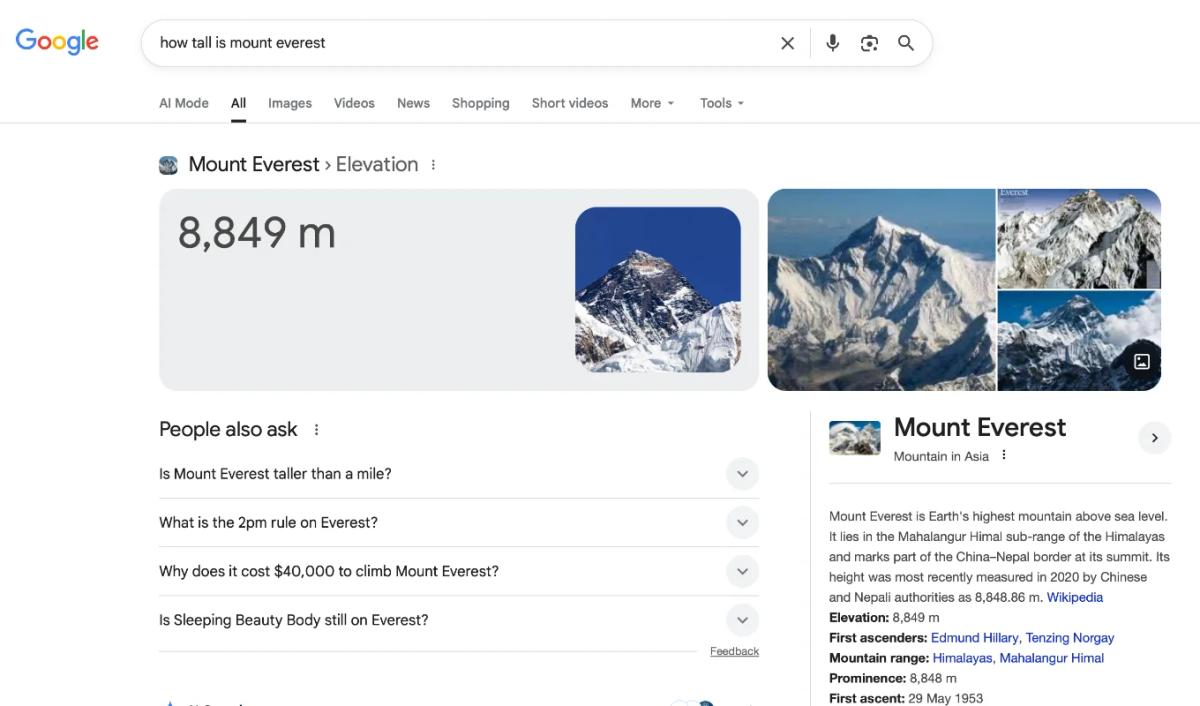
The reason was simple. Most of the queries he was ranking for were now zero-click searches – Google was answering the question on the results page itself, with a calculator, a knowledge panel, an AI Overview, or a featured snippet, and the user was finishing their session without ever leaving Google.
Zero-click searches are the single biggest reason most UK small business owners I work with see “rankings fine, traffic falling” charts in 2026. This post explains what they are, why they happen, how they hit small businesses specifically, and what to actually do about them.
A zero-click search is any Google or Bing search where the user gets the answer they wanted directly on the search results page – no click required.
Specifically, the user’s journey looks like this:
The original concept came from featured snippets – the highlighted answer boxes Google introduced in 2014. Snippets pulled a paragraph or list from a ranking page and showed it above the blue links. Users got the answer they needed and many didn’t bother clicking through.
Since then, the surfaces that produce zero-click results have multiplied. Today, the most common ones are:
If your query lands a user on any of those without them needing to click a blue link, that’s a zero-click search.
This is the most common question I get from UK small business owners in 2026, and the answer is almost always zero-click compression.
Here’s the diagnostic. Open Search Console. Look at the last 12 months versus the previous 12 months for your top fifty queries. You’re looking at four columns: clicks, impressions, position, CTR.
If impressions are roughly flat or up, position is roughly stable, but clicks and CTR are down – you’re not losing rankings. You’re losing clicks at the rankings you already have. That’s zero-click compression. Google is answering more of those queries above the blue links, and a chunk of the users you used to get are now getting their answer without visiting your site.
A few patterns I see all the time:
In every case, the page is still ranking. The page is still being seen. The user is just being served the answer at the top of the page before they get to the blue link.
This is why the “rankings up, traffic down” chart became the default shape across UK small business sites between 2023 and 2026. The metric that used to track everything (position) doesn’t track what users actually do any more.
Worth knowing which surfaces eat your clicks, because the answer to “what do I do about it” depends on which type of zero-click result is hitting you.
Featured snippets. A box at the top of the results that lifts a paragraph, list, or table from a ranking page. The site that gets snippeted often loses some CTR – the user reads the snippet and bounces. But getting your own page snippeted is sometimes a net positive on brand visibility, since your name and link still show. Mixed bag.
Knowledge panels. Facts pulled from Wikipedia, Wikidata, official feeds, and Google’s own data. Most of the major UK companies have one. Sole traders and small businesses usually don’t, but you can build one over time with entity optimisation work – structured data on your site, Wikidata entries, Google Business Profile.
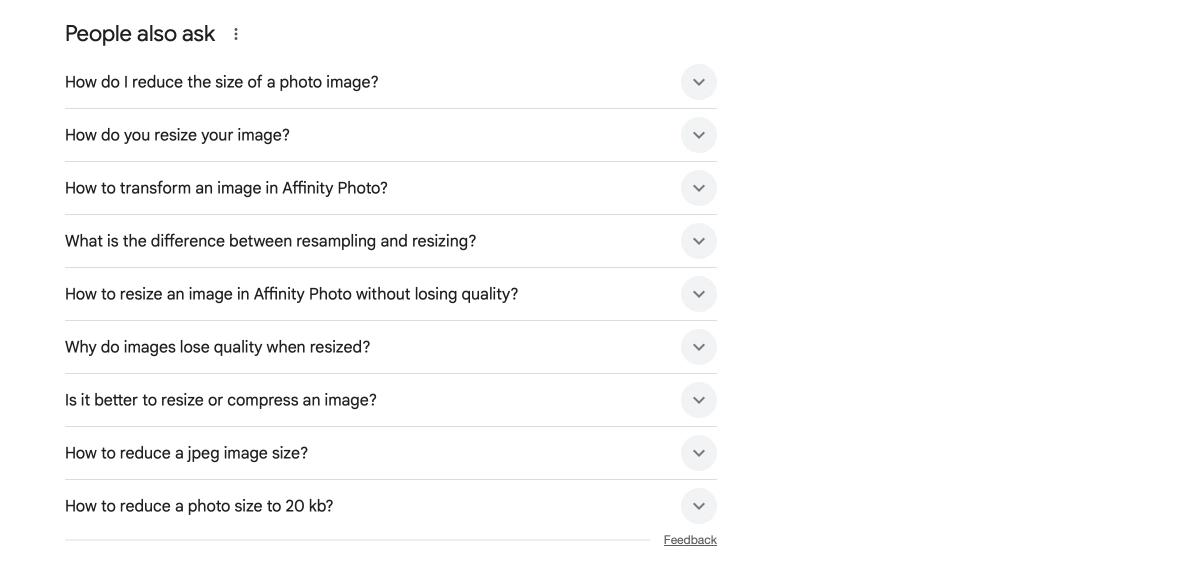
People Also Ask (PAA). A growing percentage of UK results show 4–8 PAA questions below the first result. Each one expands to show an extracted answer. Clicking the answer text usually triggers a new search – sometimes back to the source page. PAA is partial zero-click: a click on a PAA item often does send a visit, but a much shorter one.
Local map pack. The three-listing map block above organic results for local-intent queries. If your business doesn’t appear in the map pack for “Keswick plumber”, you’re below the fold on most phones. The map pack is where local trades win or lose.
AI Overviews. The most aggressive zero-click surface. A 50–200 word AI-generated summary at the very top, citing 2–4 source pages. The cited pages get a click some of the time – but the click-through rate on AI Overview citations is well below classic organic CTR.
Google’s calculators and widgets. Mortgages, currency, units, time zones, lyrics, weather, flights, hotels. When Google launches a calculator for a query class, the organic CTR on that query class collapses overnight. There’s no winning these back – you have to pivot the queries you target.
Definitions, sports scores, public data. Always answered above the fold. If your business relies on traffic from definition queries, you’ve already lost. Time to pivot.
Featured snippets are the original zero-click surface and still account for a chunk of zero-click results in 2026.
A featured snippet is a highlighted box at the top of the Google results that shows an extracted answer to the query, pulled from one of the top-ranking pages. There are four common formats:
If your page is featured-snippeted, your link appears at the top of the page with the extracted answer above it. That’s both visibility and a loss of click – research from Ahrefs and Sistrix has shown the snippeted page tends to gain impressions but lose some CTR compared to a normal top-1 listing, because half the users get what they need from the snippet itself.
For most small businesses, the snippet calculation is roughly: net positive on brand visibility, net negative on traffic, with the exact balance depending on whether the snippet is satisfying enough for the user to stop reading.
The newer twist: AI Overviews often replace featured snippets for the same query class. Google’s been quietly retiring featured snippets in favour of AI Overviews on queries where the AI summary feels like a better answer. The result for site owners is the same – less traffic from a query you used to dominate.
AI Overviews are the most consequential zero-click surface Google has ever launched, and they’re a direct extension of the featured snippet idea.
The mechanics: when Google detects an informational query that would benefit from a generated summary, it triggers AI Overviews. A box appears at the top of the SERP with a 50–200 word answer, plus 2–4 citation links to the source pages the answer was built from.
For users, AI Overviews compress three or four steps of research into one read. They’re satisfying – and that’s the problem for source sites. Internal data from a handful of UK clients I’ve worked with shows CTR on top-3 positions falling 25–45% when AI Overviews appear for a query, compared to the same query before AI Overviews triggered.
AI Overviews are why zero-click rates jumped in 2024 and again in 2025 after global rollout. They’re the surface that took zero-click from a steady creep to a step-change.
That said, AI Overviews are also an opportunity. Pages that get cited inside the AI Overview get their domain shown to every user who reads the answer. The user might not click through every time, but they see your brand. Over months and quarters, that brand exposure converts into branded search demand – searches for your name specifically, which are far higher intent than the cold informational searches you lost.
That’s the trade. Less direct click traffic. More brand citation visibility. Different shape, similar net value if you play it right.
The headline figures, drawn from the data I’ve gathered across small business clients between 2023 and 2026:
Aggregated across a typical UK small business site that publishes a mix of educational, local, and decision-stage content, total organic clicks in 2026 are usually 25–40% down on 2022 levels – even when impressions and rankings are flat or up.
Two things to keep in mind reading those numbers.
One: not all small businesses are hit equally. A bricks-and-mortar local trade with mostly local-intent queries has been hit by the map pack but not so much by AI Overviews. A B2B services business with mostly informational top-of-funnel queries has been hit hard by AI Overviews. Recipe sites and reference sites have been hit hardest of all.
Two: traffic isn’t the only metric. Lost clicks at the top of the funnel often coexist with stable or rising enquiry volumes – because the users who do click through after seeing your brand in the AI Overview are warmer, better-qualified visitors than the cold informational click-throughs you used to get. Many of my clients are seeing fewer sessions but more enquiries per session.
UK small businesses get hit by zero-click compression harder than most enterprise sites, for three reasons.
One: more of your traffic comes from informational queries. Big brands get a lot of traffic from branded search (“Nationwide mortgage rates”) that AI Overviews don’t touch. Small businesses get most of their traffic from non-branded informational queries (“how much can I borrow on a £45k salary”) – the exact query class that AI Overviews answer.
Two: more of your pages are knowledge content. Educational blog posts, FAQ-style pages, “what is X” explainers. That’s the content that AI Overviews summarise. The pages most small businesses invested in for SEO between 2019 and 2023 are the pages now feeding AI Overviews instead of getting clicks.
Three: your brand authority doesn’t pull the click anyway. When an AI Overview cites “Investopedia, BBC, and Money Saving Expert”, users sometimes click the cited sources because the names are familiar. When an AI Overview cites “John Smith Mortgage Advisers, Whitehaven”, users often don’t, because the brand doesn’t carry weight yet. Big brands recover some of their CTR through name recognition. Small businesses don’t.
The combination is brutal: small businesses lost more clicks proportionally than big brands and have fewer brand-pull mechanisms to backfill the loss.
That said, small businesses also have an advantage big brands don’t. You can move faster. A 10-person agency can rewrite a content strategy in a quarter. A FTSE 100 brand takes 18 months to sign off the same pivot. The owners of small UK businesses who acted on zero-click in 2024 are doing better in 2026 than the ones who waited.
Yes – but the SEO that worked in 2018 isn’t the SEO that works in 2026.
SEO in 2026 has three jobs, not one.
Job one: capture the clicks that still happen. Decision-stage queries, comparison queries, “near me” queries, branded queries, transactional queries – most of these still produce clicks. They’re a smaller pool than 2018, but they convert at higher rates. SEO that targets these queries is alive and well worth the work.
Job two: get cited in AI answers. Answer engine optimisation. Question-led structure, direct first-sentence answers, FAQ schema, named author bios. Pages that get cited in ChatGPT, Perplexity, AI Overviews, and Gemini build brand visibility you’d otherwise have to pay for.
Job three: build branded search demand. The end goal of jobs one and two is people typing your business name into Google. Branded search is the highest-CTR, highest-conversion search class there is. AI Overviews don’t trigger on branded queries. Featured snippets don’t bury your homepage. Branded search is the click traffic AI search can’t take away from you.
If you measure SEO in 2026 only by total organic sessions, you’ll think it’s broken. If you measure it by qualified enquiries, branded search volume, and AI citation share, you’ll see the work is still earning its keep – just through different mechanisms.
The Mortgage advisors I work with who pivoted in 2024 are now running on 60% of their 2022 organic sessions but 130% of their 2022 enquiries. SEO didn’t stop working. The metrics changed shape.
There are five plays I run with small business clients, in roughly this order of priority.
1. Stop competing for queries Google answers above the page. Identify the queries that have AI Overviews, knowledge panels, calculators, or direct answer boxes in front of them. Stop building new content for those queries. You can’t out-rank Google’s own widget. Free up the budget for queries where the click still happens.
2. Move up the funnel to decision-stage queries. “Mortgage affordability calculator” is zero-click. “Should I fix my mortgage for 2 years or 5 years in 2026” is not – the answer needs human judgement, and the user wants reassurance from a named source. Decision-stage queries trigger fewer AI Overviews and convert harder. Most small businesses have plenty of room to expand into these.
3. Build “search everywhere” demand. Reddit, LinkedIn, YouTube, industry forums. The audiences that used to find you through Google are now spread across surfaces. Show up on three of those surfaces consistently and you’ll generate branded search demand that bypasses zero-click results entirely.
4. Optimise the remaining clicks for conversion. If you’re getting 40% fewer clicks than 2022, the clicks you do get need to convert at higher rates to stay even. CRO work – clearer messaging, less friction, stronger trust signals – pays compound interest in a zero-click world.
5. Track AI citation share alongside clicks. Profound, Goodie, Otterly, or manual sampling of your top 20 informational queries across ChatGPT, Perplexity, and AI Overviews. If your brand appears in those answers, you’re winning visibility even when clicks are down. If it doesn’t, that’s the next gap to close.
The fundamental shift: in 2018, SEO success looked like more clicks. In 2026, SEO success looks like more enquiries and stronger branded search demand, off a smaller volume of higher-quality clicks. Different scoreboard.
Here’s the workflow I use on a fresh small business engagement when zero-click is the headline issue.
Week 1: diagnose the loss. Pull Search Console data for 12 months versus the previous 12 months. Identify the top 50 queries. Bucket them: clicks roughly stable, clicks down 10–30%, clicks down 30–50%, clicks down 50%+. The third and fourth buckets are zero-click victims.
Week 2: classify the losses by surface. Take the heaviest-loss queries and search them yourself. Note what’s eating the click: AI Overview, featured snippet, knowledge panel, calculator, map pack. The fix depends on the surface.
Week 3: triage. Decide what to do with each affected page:
Week 4: new content plan. Build the next 12 weeks of content around decision-stage and comparison-stage queries that AI Overviews don’t dominate. Comparison content (“X vs Y”), recent-data content (“latest 2026 rates”), local content, and named-source opinion pieces.
Weeks 5–12: implement. Rewrite the highest-priority restructure candidates first. Publish new decision-stage content alongside. Add named author bios. Add FAQ schema. Add updated dates. Build brand citations on Reddit, LinkedIn, and industry sites.
Quarter 2 onward: measure. Click metrics will move slowly. Branded search volume, AI citation share, and enquiry conversion rates will move faster. Stack quarters until the shape of the chart inverts – clicks plateau or stabilise, enquiries rise.
A few practical UK-specific moves worth doing on top of the general workflow:
None of these are revolutionary. They’re the basic UK-aware moves that catch the long tail of zero-click queries where the click still happens, often on geographic or temporal specificity.
The Cumbria based mortgage advisor I opened with is a clean case of the full zero-click playbook.
The starting position (March 2026). Site getting 1,600 monthly sessions, down from 3,300 monthly sessions in 2022. Rankings strong – top-3 for “mortgage affordability calculator UK”, “how much can I borrow UK”, “first time buyer mortgages UK”, and twelve other high-volume informational queries. Sessions had collapsed because:
Enquiry conversion was holding at 2.3%, but total enquiries had dropped from 92/month to 41/month with the traffic.
The pivot. Six weeks of work covered three changes.
The result (October 2026, seven months in). Sessions: 2,400/month (up from 1,800 but still below the 2022 peak). Enquiry rate: 4.6% (more than doubled). Total enquiries: 110/month — above the 2022 peak.
The traffic chart still looks worse than 2022. The business chart looks better. Same site, same brand, different content strategy.
I undercounted how fast Google would push native widgets into the SERP. In 2023 I was still telling clients that snippets were the main zero-click threat and AI Overviews would take years to roll out broadly. Both calls were wrong.
Two clients lost months of revenue waiting for me to recognise that calculator and widget queries weren’t coming back, no matter how good the page was. The lesson stuck: if Google launches a native widget for a query, write that query off and move the strategy elsewhere immediately. You won’t outrun the widget by ranking better. You’ll outrun it by ranking for a different question altogether.
A zero-click search is a Google or Bing search where the user gets the answer they wanted directly on the results page – no click through to any source website. Most zero-click results come from featured snippets, knowledge panels, People Also Ask, the local map pack, Google’s calculators and widgets, AI Overviews, or direct answer boxes.
Almost always zero-click compression. Your pages are still ranking well, but Google is answering more of those queries at the top of the results page itself, so users get what they need without clicking through. Check Search Console for impressions versus clicks across your top 50 queries – if impressions are stable but clicks are down, that’s the diagnosis.
Small UK businesses are hit harder than big brands because more of their traffic comes from non-branded informational queries (the ones AI Overviews and calculators answer above the fold), more of their pages are knowledge-style content (the kind being summarised), and they don’t have the brand authority to pull the click anyway. Most small business sites have seen organic clicks fall 25–40% since 2022 even when rankings are flat.
Yes – the SEO that works in 2026 is different. It targets decision-stage queries (where clicks still happen), pursues AI citations (so your brand shows up in answers), and builds branded search demand (the click traffic AI can’t take). Most of my clients are running on 60% of their 2022 organic sessions but generating more enquiries because the traffic that does land is higher quality.
Move up the funnel from fact and definition queries to decision and comparison queries. Build “search everywhere” presence on Reddit, LinkedIn, YouTube, and industry forums. Get cited inside AI answers (answer engine optimisation work). Optimise the conversion rate of the clicks you do get. Don’t try to out-rank Google’s own widgets – pivot the queries you target instead.
Featured snippets are one type of zero-click result, not the only one. The snippet box was the first zero-click surface Google launched (in 2014). Since then, knowledge panels, calculators, the map pack, AI Overviews, and direct answer boxes have all joined the zero-click family. AI Overviews are now the biggest single source of zero-click answers.
AI Overviews are the most aggressive zero-click surface Google has ever launched. They produce a 50–200 word AI-generated answer at the top of the results page, citing 2–4 source pages. CTR on top-ranked pages dropped 25–45% on average when AI Overviews trigger. The cited pages get a small share of clicks plus brand visibility – but most users finish their session inside the Overview.
Five UK-specific moves: complete your Google Business Profile (for any local-intent business); add UK-appropriate structured data; build a Wikidata entry; create real local pages for “[service] [city]” and “[service] [neighbourhood]”; use UK-specific date markers (“2026 UK”, “post-Budget 2026”) to signal freshness. Pair with the general zero-click playbook – decision-stage content, AI citation work, branded search building.
No. SEO is changing, not disappearing. Total Google search volume is still growing in 2026. The shape of which queries produce clicks and which produce zero-click answers is what changed. Small businesses that adjust their content strategy to the new shape are doing fine. The ones that haven’t adjusted are losing ground.
Zero-click searches aren’t a glitch. They’re how Google works now. Most informational queries get answered above the page. A large slice of fact and definition queries don’t produce clicks at all. AI Overviews keep expanding into more query classes.
For UK small businesses, the chart you’re looking at – impressions up, clicks down, rankings fine – is the new shape of organic search. The work isn’t to fight Google for the lost clicks. It’s to pick the queries that still produce clicks, get cited in the answers that don’t, and turn the clicks you do get into enquiries at higher rates.
That shift is doable inside a quarter. The brokers, accountants, dentists, and agencies I work with who started it in 2024 and 2025 are now running more profitable businesses on less traffic than they had in 2022. The metric that matters is enquiries, not sessions. Once you accept the scoreboard changed, the work is the same as it ever was – useful pages, clear writing, real expertise, named authors, and patience.
If you’d rather not run the zero-click audit and pivot yourself – that’s literally what we do. Contact us and we’ll diagnose where your zero-click losses are, tell you what to pivot and what to retire, and handle everything for you.
Published: 18 November 2025
Published: 19 October 2025
Published: 23 June 2025
We respect your inbox. While we may occasionally send you information about our services, you can unsubscribe at any time.
We protect your information as outlined in our privacy policy.