
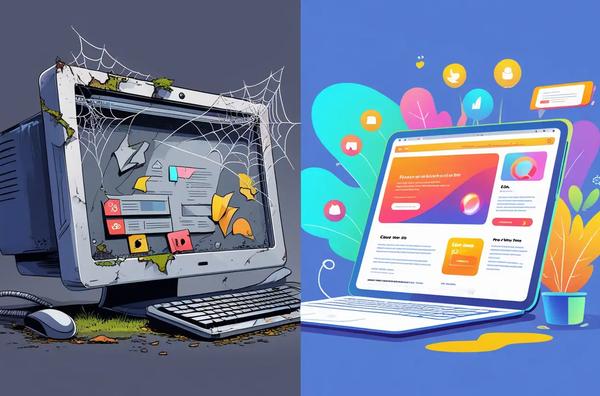
Having a Website and Having a Website That Works Are Not the Same Thing
Published: 3 June 2025

A Kelso-based independent dental practice rang me in Mid 2025 with a familiar story. They’d paid £8,500 for a redesign in 2023 to an agency in Glasgow. The site looked good, launched on time, and worked well for the first six months. Then the agency went bust. The owners disappeared. And the dental practice discovered three things they should have asked about before signing the contract.
They couldn’t move the site. They couldn’t update the site. They couldn’t even confirm who owned the domain. It took two months and another £2,000 to recover everything and rebuild on a clean setup. The practice manager said the same thing every burnt client says: “We should have asked.”
This post is the list of questions I now tell every UK small business owner to ask before they sign with a web designer – agency, freelancer, or in-between. There are eleven of them. Some are obvious. Some catch designers off-guard. All of them together separate the designers who will build you a working asset from the ones who’ll leave you stranded.
A new website is one of the biggest commercial investments a UK small business makes outside of premises, vehicles, and staff. Most owners spend more time choosing a coffee machine than they do choosing a web designer. The result is the predictable one: under-prepared owners hire under-vetted designers, and the project struggles or fails for reasons that could have been spotted in the first meeting.
The cost of getting it wrong is rarely just the project fee. It’s the months of lost commercial output as the site limps along, the second project to rebuild what should have worked the first time, the unrecoverable customer data when a hosting account goes dark, the lost SEO equity when a redesign tanks the rankings.
The questions in this post don’t take long to ask. They reveal more than any portfolio gallery ever will. And the way a designer answers tells you everything about whether you’ll have a working business relationship six months in.
What you’re testing: relevant experience and the ability to deliver in your sector.
A portfolio shows what a designer wants to be hired for. Specific case studies in your sector show what they’ve actually delivered. Ask for sites still live, businesses still trading, and ideally with measurable commercial outcomes attached – “this site doubled their enquiries in six months” beats “this site won a design award”.
What to listen for: real businesses you can verify (Google them), names you can speak to, and outcomes expressed in numbers. Be wary of designers who can only show personal-favourite projects or who deflect with “we mostly work on confidential briefs”. Confidential briefs exist; “everything is confidential” rarely does.
What you’re testing: whether the senior person you’re meeting will be the senior person on your project.
Agencies are famous for selling the project with their best people and delivering with their juniors. Freelancers are famous for outsourcing parts of the build to subcontractors you’ve never spoken to. Either is fine if it’s transparent; neither is fine if it isn’t.
What to listen for: clear naming of who’ll do the design, the build, the copy, the QA, and the launch. A clear answer on whether anyone is outsourced and who supervises them. Be wary of “our team will handle it” with no specifics – your project is about to be handed to whoever’s free.
What you’re testing: whether you’ll know what the project actually costs before you sign.
Fixed-price quotes are uncommon in web design because the work has genuine variables. That’s understandable – but a designer should be able to tell you, in writing, what the base price covers and exactly what triggers an additional charge.
What to listen for: a written breakdown that includes design, build, content support, SEO setup, testing, launch, and post-launch handover. Specifics on what scope changes cost (“£X per additional page”, “£Y per round of revisions beyond two”). Be wary of “we’ll quote as we go” – that’s a scope-creep machine.
What you’re testing: whether the designer understands a 2026 website needs to be findable, not just functional.
The right answer isn’t “we’ll handle SEO”. It’s a specific plan covering URL structure, meta data, internal linking, schema markup, page speed, mobile usability, structured data for AI engines, and migration strategy if you’re replacing an existing site. The plan should reference your existing rankings (if you have them) and how the new site protects them.
What to listen for: confident, specific answers on technical SEO, content structure, AI search readiness, and migration risk. The phrase “we don’t really do SEO, you’d want to hire someone separately” is a red flag in 2026 – a competent web designer in 2026 builds for findability as a baseline.
What you’re testing: whether the revision process is structured or chaotic.
Every project hits a moment where the client isn’t sure about a design direction. Good designers have a process. Bad designers either get defensive or capitulate, both of which produce bad outcomes.
What to listen for: a clear revision process – how many rounds, what’s included, what counts as a “new direction” vs an “amendment”, who has final say on each element, and what happens if you’re still not happy after the included revisions. Be wary of “we just keep iterating until you’re happy” – that means scope creep with no commercial boundary.

What you’re testing: whether you’ll actually own what you paid for.
This is the question the Kelso dental practice wishes they’d asked in 2023. Ownership covers the design files, the code, the content, the photography, the domain registration, the hosting account, the CMS login, the email forwarders, the analytics, and the database.
What to listen for: clear, unambiguous ownership transfer on full payment. Domain registered in your business name. Hosting in your business name (or transferable on request). All source files handed over with a signed deliverables list. Be wary of any setup where the designer “holds” things on your behalf – that’s leverage they can use later.
What you’re testing: whether post-launch is a service or a hostage situation.
Most sites need ongoing maintenance – software updates, security patches, hosting renewals, content tweaks, the occasional fix. The question is whether you pay for what you use or whether you’re locked into a multi-year retainer with cancellation fees.
What to listen for: month-to-month ongoing support with a clear hourly rate or fixed monthly plan. The ability to cancel with reasonable notice (30–60 days is fair). The option to take maintenance elsewhere without losing access to the site. Be wary of multi-year mandatory retainers, big early-termination fees, or hosting that’s bundled in a way that makes leaving impossible.
What you’re testing: realism, accountability, and project management discipline.
Web design timelines slip – most of the slippage is on the client side (delayed content, slow approvals, late feedback), but designers contribute their share too. The right answer is realistic, structured, and honest about what could cause delays.
What to listen for: a project plan with named milestones, dependencies clearly flagged (which milestones need your input by when), and a clear statement of what happens if the project runs late on the designer’s side vs on yours. Be wary of “we usually launch in 6 weeks” with no plan – that’s an optimistic promise without accountability.
What you’re testing: whether the designer’s working clients say the same things the designer says about themselves.
A reference call is the cheapest, fastest, most accurate vetting move you can make. Three calls, fifteen minutes each, and you’ll know more about the designer than you’d learn from a hundred portfolio pages.
What to listen for: three names offered without hesitation, ideally including one project from the last six months and one from over two years ago (so you can ask both about the initial experience and the post-launch relationship). Be wary of “our clients are too busy to take calls” – that’s a screen-out tactic, not a real constraint.
Ask the references three questions: would you hire them again, what was the worst moment in the project and how did they handle it, and is the site still doing the commercial job it was built for?
What you’re testing: whether the commercial relationship is professional.
Some designers work on a handshake. Some on a proposal email. Some on a proper contract. For projects above £2,000–£3,000 in 2026, you want a proper contract – and you want to read it before you commit, not after.
What to listen for: a willingness to share a standard contract template before the first invoice. Clear terms on scope, payment schedule, ownership transfer, confidentiality, data protection (UK GDPR), revision rounds, cancellation, and dispute resolution. Be wary of any designer who can’t produce a contract until you’ve paid the deposit.
What you’re testing: whether the designer has thought about the client side of the workflow.
A good designer has a clear answer to this because they’ve watched projects succeed and fail based on what the client did or didn’t do. A bad designer says “just send over your brief and we’ll handle it” – which means they have no system for getting what they need from you, which means they’ll miss things.
What to listen for: a defined list of what you need to provide and when (brand guidelines, photography, copy, decision-maker availability, feedback turnaround commitments, login credentials for any existing assets). A clear statement of what they’ll do if you’re slow with feedback. Be wary of “we’ll just figure it out as we go” – that’s how projects run six months over.
Some answers tell you more by their shape than their content. The following are the patterns I see in projects that go wrong – across more than 70 web designer engagements I’ve audited, taken over, or rescued in 18 years.
Most of the above don’t appear in isolation. Bad engagements usually combine three or four of them. If a designer ticks two of these, ask harder questions. If they tick four, walk.
The opposite of the red flags is the positive checklist.
You can find most of these in freelancers, small studios, and proper agencies. None of them is exclusive to a particular size of operation. What matters is the consistency of the answers and the willingness to put them in writing.
The “local vs agency” question is the one I get asked most often, and it’s almost always the wrong frame.
The right question is: have they delivered work like yours?
A local web designer who’s built six websites for plumbers, accountants, or independent dental practices in your region will almost always be a better fit than a London agency that’s built for FTSE-listed brands and is taking your project on as a courtesy. The reverse is also true – a national agency with experience in your sector will outperform a local generalist for a complex e-commerce or multi-location project.
Things local can be genuinely better at:
Things a larger agency can be genuinely better at:
A good local web designer for a UK small business often beats a generic national agency. A good national agency for a specialist B2B build often beats a generalist local freelancer. Match the choice to the brief, not the postcode.
A web design quote should leave no ambiguity about what you’re paying for and what you’re not. The minimum I’d expect to see:
A two-page quote with proper line items beats a one-line “£6,500 for a website” every time. The work of writing a real quote signals the work of running a real project.
The other half of a successful project is what the client brings. A web designer needs:
The clients who get the best web design outcomes are the ones who treat it like a real commercial project with their own deliverables. The ones who hand it over and disappear get whatever the designer decides looks good.
A 2026 web designer should be able to answer SEO questions with the same fluency they answer design questions. Five specific ones to test:
A designer who can answer these confidently is building for 2026 reality. One who deflects or says “you’ll want to hire an SEO separately” is building you a brochure.
UK-specific contract checks worth running through before you sign:
Most reputable UK web designers will have a standard contract that covers these. If yours doesn’t, ask for one before you commit.
Most “rip-offs” in UK web design aren’t outright fraud – they’re a combination of unclear scope, poor communication, and badly-aligned incentives that produce a result the client wasn’t expecting. The defences:
The vast majority of UK web designers are competent and honest. The bad ones are concentrated in the bottom price bands (under £1,500) and in the agencies that have grown faster than their operations can support. Doing 90 minutes of due diligence – twelve questions, three reference calls, a contract read – eliminates almost all of the risk.
I spent years assuming clients knew to ask about domain ownership. I’d mention it in the kick-off meeting, see them nod, and assume they’d understood. They hadn’t. About 30% of the time, the domain was already registered somewhere the client couldn’t access, and we’d burn weeks recovering it.
I now treat ownership as a written, signed-off checklist that has to be completed before design work begins. Every new client is walked through their domain registrar, hosting account, analytics, GBP, and CMS access in the first week – not the last. The number of unrecoverable assets we’ve encountered has dropped to roughly zero.
The lesson: assume clients haven’t been told the basics by anyone, because most of them haven’t. The questions in this post should be answered before money changes hands. If you’re hiring a designer, ask them. If you’re a designer reading this, walk your clients through them yourself.
Project scope (pages, page types), design and development deliverables, content arrangements, SEO setup, launch and handover, timeline with milestones, payment schedule, what’s not included, optional extras with prices, and ongoing support pricing with cancellation terms. Two pages of line items beats a one-line headline price.
No pricing in writing, “SEO is someone else’s job”, no contract, ownership clauses that keep domain or hosting with the designer, no verifiable live portfolio, no references on offer, multi-year mandatory retainers, suspiciously short timelines on real custom work, pressure tactics (“one slot left”), and promises like “page one in 30 days”.
A clear commercial goal for the site (numbers, not vibes), named decision-making authority, brand assets, content (or a content plan), timely feedback turnaround commitments, access to existing assets (domain, hosting, analytics, CMS), and honesty about what’s not working on the current site.
For a typical UK small business custom build, 6–12 weeks end-to-end is normal. Under 4 weeks usually means templated work, which can still be good but isn’t the bespoke build people often think they’re paying for. Over 16 weeks usually means scope is too big, the team is overstretched, or the client side isn’t moving fast enough.
Yes – and any designer who refuses is a red flag. Reputable UK web designers have a standard contract template they’re happy to share before you sign or pay anything. Reading it is the most important hour of due diligence in the entire engagement.
A good web designer welcomes these questions. A great one is glad you asked because they get to answer at length about how they work. A bad one gets defensive, hedges, or tries to redirect the conversation back to their portfolio.
The eleven questions in this post aren’t a gotcha exercise. They’re the basic shape of a competent commercial conversation about a piece of work that’s going to cost you several thousand pounds and represent your business online for years. A designer who can’t answer them with specifics probably can’t deliver the work with specifics either.
If you’d like to ask us these questions – that’s literally how every fecking creative engagement starts. Contact us via our website form. We’ll send you our answers in writing before the first call, walk you through our standard contract before you commit a penny, and tell you honestly whether we’re the right fit for what you need.
Published: 3 June 2025
Published: 8 December 2023
Published: 30 November 2023
We respect your inbox. While we may occasionally send you information about our services, you can unsubscribe at any time.
We protect your information as outlined in our privacy policy.